

Some days, you leave feeling wrung out in a way that sleep does not fix. Maybe it is a demanding job that never lets up, parenting, caregiving, etc. It can be several of these at once, too.
At some point, you may catch yourself asking, “How much more can I take?” You may feel unmotivated or constantly on edge – and you cannot always point to why. It can feel like you are stuck in a pernicious cycle with no clear way out. This experience is called emotional exhaustion.
What Is Emotional Exhaustion?
Emotional exhaustion refers to mental and emotional depletion that develops after prolonged stress without enough recovery. It can make you feel emotionally drained, irritable, overwhelmed, mentally foggy, or numb, even if you are still managing your daily responsibilities.
It is not a feeling of being just tired or overwhelmed – it is a symptom of burnout that can slowly begin impacting emotional well-being, relationships, and daily functioning if it continues building over time.
Emotional exhaustion sets in when stress from ongoing demands or hardships does not let up long enough for you to recover. It is rarely triggered by a single event – it tends to grow quietly, until you notice you are running on empty. It affects how you feel, how your body responds, and how well you are able to function day to day.
How Does Emotional Exhaustion Happen?
As stress becomes ongoing, your brain treats it like a threat and produces stress hormones like cortisol to allow you to respond.
This response, known as the “fight-or-flight” response, is good to provide your body with the energy it needs, but in short bursts. When it becomes prolonged, it overloads your body and becomes one of the major reasons for emotional exhaustion.
What Are the Signs of Emotional Exhaustion?
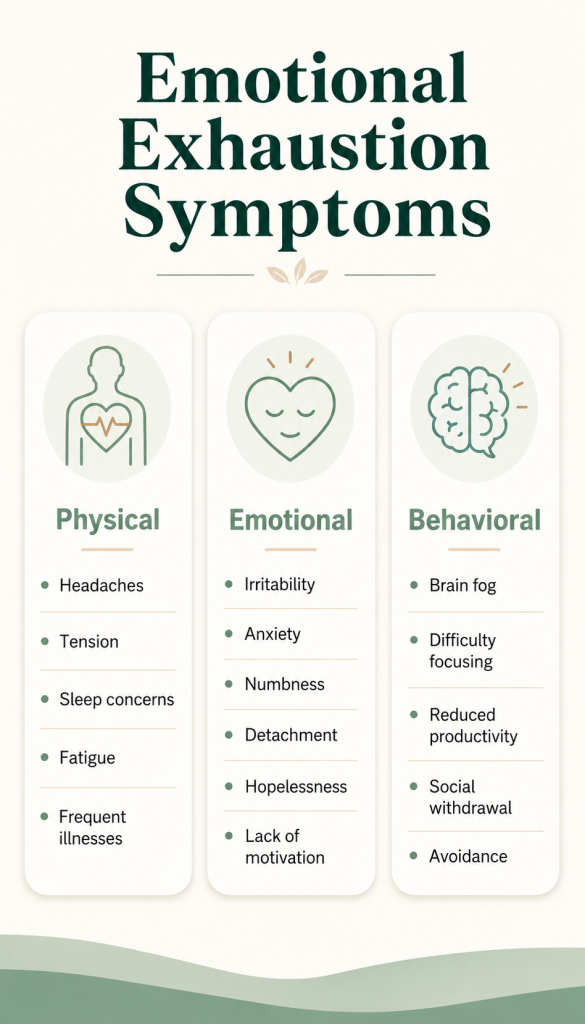
Here are some physical, emotional, and functional signs of emotional exhaustion:
Physical Signs:
- Restlessness
- Tension headaches
- Muscle tension
- Constant fatigue
- Appetite changes
- Digestive concerns.
Emotional Signs:
- Anxiety
- Irritability
- Low mood
- Trouble focusing
- Spiraling into negativity
- Crying bouts
- Feeling depleted and unmotivated.
Functional Signs:
- Caring less about the things you once liked
- Struggling to get through your daily responsibilities
- Missing deadlines
- Pulling away from your loved ones or avoiding social circumstances
- Substance use as a way to cope with the pain and suffering you feel within you.
Can You Be Emotionally Exhausted and Still Functioning?
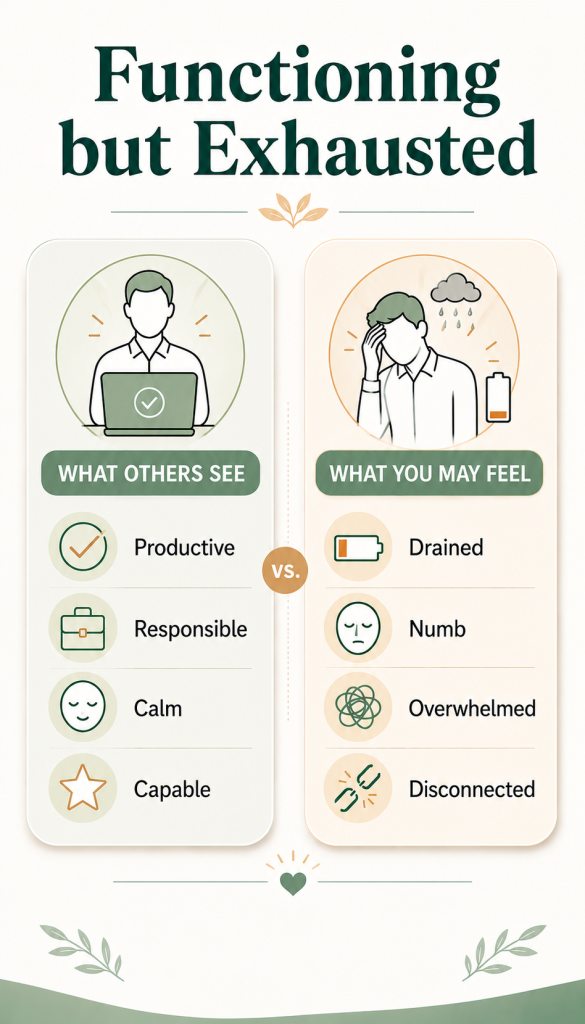
Many of those who feel emotionally exhausted continue functioning. They show up for their responsibilities and loved ones to the point that even others may see them as strong and reliable. But inside, they feel depleted, anxious, and disconnected.
If you identify with this, functioning does not always mean you are okay. Sometimes it means you have adapted to carrying more than you can recover from. This is when you are functioning but exhausted – where you keep going because you have to, even as your emotional reserves run dangerously low.
High-functioning emotional exhaustion often looks invisible from the outside. You may still respond to messages, meet deadlines, take care of people, and handle responsibilities normally. But internally, even simple tasks may begin feeling heavier than they used to.
What Can Help With Emotional Exhaustion?
Some practices you can follow to deal with emotional exhaustion:
- Eat a regular, nutritious diet
- Regular exercise
- Consistent sleep of 7-9 hours at night
- Observe unhelpful thinking patterns and reframe them into something productive
- Practice deep breathing, meditation, and mindfulness.
These steps can be useful, but they may not always be enough on their own. This is when you can reach out to licensed and trained mental health practitioners to understand what is contributing to your emotional exhaustion and what care options can meet you where you are going forward.
How Skyline Recovery Center Can Help?
At the Skyline Recovery Center, our licensed and trained mental health practitioners collaborate with you if you are experiencing emotional exhaustion to create a personalized treatment program that fits your needs and goals. Your care may entail therapy, coping strategies, and even integrated care if physical symptoms require medical attention as well.
Whenever you are ready, you can explore structured outpatient programs like partial hospitalization and intensive outpatient programs that offer therapy and clinical oversight without requiring you to step away from your life.
Our goal is not to have you in one program, but create one that is unique to you – and meets you where you are to lay a strong foundation for your healthier tomorrow.