

Disclaimer: This article is meant for educational and informational purposes only. If you suspect symptoms of a mental breakdown, reach out to a licensed and experienced mental health specialist for a proper diagnosis and treatment. For emergency or urgent needs, call 9-1-1 or your local emergency numbers immediately.
A mental breakdown—sometimes called a nervous breakdown—is a period of overwhelming emotional distress in which a person may struggle to cope with daily responsibilities due to severe stress, anxiety, depression, or trauma.
Although the term “mental breakdown” is not a formal medical diagnosis, it is commonly used to describe a mental health crisis where emotional stress becomes difficult to manage and begins interfering with everyday life.
Common signs of a mental breakdown may include:
- Intense anxiety
- Depression or persistent sadness
- Irritability or anger
- Panic attacks
- Difficulty concentrating
- Social withdrawal
- Exhaustion or emotional burnout
When emotional distress begins affecting work, relationships, or daily responsibilities, it may be a sign that professional mental health support could help restore stability and coping skills.
What Causes a Mental Breakdown?
A mental breakdown can be related to a single stressful event, stressful events like life transitions, or even untreated mental health conditions, like anxiety, depression, trauma, or post-traumatic stress disorder (PTSD).
Some other factors that add to the risk of a mental breakdown are:
- Persistent or chronic stress
- Poverty, homelessness, unemployment, or other financial struggles
- Relationship struggles
- Lack of a strong social support system
- Lack of productive coping skills and strategies.
What Are the Stages of a Mental Breakdown?
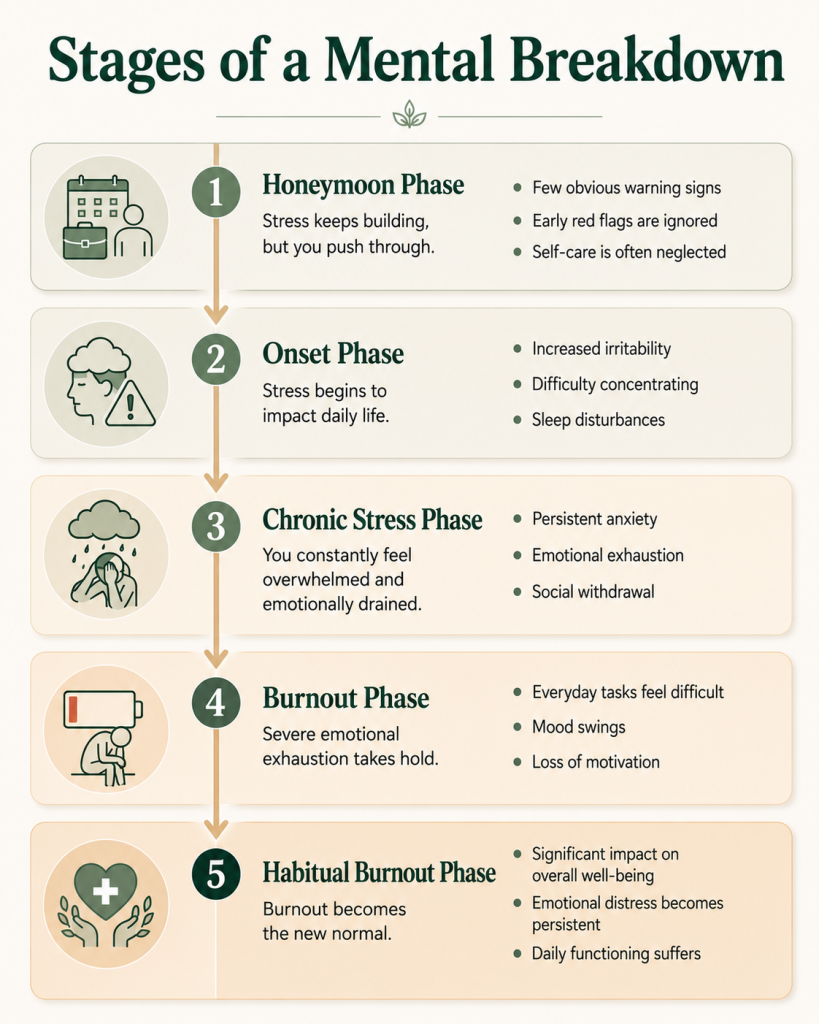
While “mental breakdown” is not a clinical diagnosis, mental health professionals often observe a progression where prolonged stress gradually leads to emotional exhaustion and burnout. Recognizing early warning signs can help individuals seek support before symptoms become overwhelming.
Although everyone’s experience is different, many people report moving through several stages as stress intensifies:
The Honeymoon Phase – At this stage, there may be few noticeable warning signs. Stress levels may be increasing due to work, school, relationships, or life transitions, but individuals often continue pushing through responsibilities without prioritizing rest or self-care.
The Onset Phase – Stress begins to affect daily functioning. You may notice increased irritability, difficulty concentrating, changes in sleep patterns, or physical symptoms such as headaches or fatigue. Productivity and motivation may also start to decline.
The Chronic Stress Phase – Emotional strain becomes more persistent. Individuals may feel overwhelmed, anxious, or emotionally drained. Some people begin withdrawing socially or relying on unhealthy coping mechanisms, such as alcohol or substance use, to manage stress.
The Burnout Phase – At this stage, emotional exhaustion becomes more severe. Daily responsibilities may feel difficult to manage, and symptoms such as fatigue, detachment, mood swings, or loss of motivation can interfere with work, school, or relationships.
The Habitual Burnout Phase – When chronic stress and burnout continue without support, emotional distress can become part of daily life. This stage may significantly affect overall wellbeing, making professional mental health care an important step toward recovery and stabilization.
What Are the Signs of a Mental Breakdown?
The stages of a mental breakdown may seem like too much theory to ascertain the signs of a mental breakdown. So, if you are wondering, “How do I know if I’m having a mental breakdown?”, then we will simplify it for you by listing the mental breakdown symptoms you can look into more directly:
Cognitive Signs of a Mental Breakdown:
- Difficulty focusing
- Lowered or a lack of decision-making
- Brain fog.
Physical Mental Breakdown Symptoms:
- Sweating
- Fatigue
- Muscle and body pains
- Sleeplessness and other sleep disturbances
- Changes in the sex drive
- Bowel problems, like irritable bowel syndrome
- Chest pain.
Emotional Signs of a Mental Breakdown:
- Anxiety
- Irritability
- Panic attacks
- Mood swings
- Detachment
Behavioral Signs of a Mental Breakdown:
- Avoiding studies, work, and other responsibilities
- Avoiding family and friends
- Neglecting personal hygiene and other needs
- Increased substance use.
How Do You Know If You Are Having a Mental Breakdown?
A mental breakdown often occurs when emotional stress becomes overwhelming and begins interfering with daily functioning. You may feel unable to cope with responsibilities, experience intense emotional distress, or notice sudden changes in behavior, mood, and energy levels.
For many, these signs build gradually. Anxiety, persistent sadness, sleep concerns, fatigue, and social withdrawal may slowly intensify until everyday tasks begin to feel unmanageable.
When emotional distress begins impacting your school, work, relationships, or basic daily routines, it may be a signal that professional mental health care can be beneficial.
How Long Does a Mental Breakdown Last?
How long a mental breakdown lasts can vary significantly from person to person. For some, the intense symptoms may last a few days, while others may experience distress for several weeks or longer – even up to a few months.
Factors such as the underlying reasons, access to a strong social support system, coping strategies, and reaching out to mental health specialists can all have an impact on the recovery time.
Seeking mental health support early can often help stabilize symptoms and shorten the duration of this period.
What Should You Do If You Are Experiencing a Mental Breakdown?
If you believe you may be experiencing a mental breakdown, the most important step is reaching out to those you can trust. Speaking with a trusted family member, friend, healthcare provider, or mental health specialist can help you begin addressing the stress or emotional overwhelm you are facing.
Professional care may include therapy, counseling, stress-management strategies, or structured mental health treatment programs designed to help you regain stability and coping skills.
Early intervention can make a meaningful difference in helping you recover and restore emotional balance.
When Mental Health Symptoms Require Professional Support
If you or a loved one is struggling with any of the mental breakdown symptoms, then it is crucial to seek help. You can reach out to your primary healthcare provider or licensed and trained mental health professionals.
If your symptoms last more than 2 weeks and are negatively affecting your daily life and functioning, it is time to reach out. Remember, you are not alone in this journey. With psychotherapy, supportive counseling, and even medications, your mental breakdown symptoms can be managed as you move toward healing and a healthier future.
Sometimes, you may need structured outpatient care, trauma-focused care, or dual diagnosis treatment to address co-occurring substance use concerns as well. Reaching out to a mental health specialist early can determine the level of care you need for recovery and reduce the chances of a mental breakdown in the future as well.
If anybody is experiencing suicidal thoughts or ideation, call 9-8-8 if you are in the U.S., or your national helplines immediately. This can be a life-saving move.
Your Healing Begins With Just One Step!
When mental breakdown gets to you, and everything feels overwhelming, remember you are not alone – Skyline Recovery is here for you. Our expert team of psychotherapists and psychiatrists understands how distressing this can feel for you. Hence, we provide personalized recovery plans so that you can regain stability and resilience as you journey toward a brighter tomorrow.
If emotional distress is beginning to affect your ability to work, maintain relationships, or care for yourself, professional support can help stabilize symptoms and restore balance. Contact us at (424) 353-5206 today.
Skyline Recovery Center provides structured outpatient mental health treatment designed to help individuals regain emotional stability and build healthier coping strategies.