
An anxiety attack is your mind and body reacting to danger, even when you are not in one. It happens in anticipation of the fear of a specific threat that may happen.
Many experience moments when their heart races, breathing feels tight, and everything in their body screams that something is wrong, even when they are safe. These episodes can feel incredibly intense and scary, but they are the body’s stress response becoming activated.
Many people experiencing an anxiety attack genuinely believe something dangerous is happening to their body in the moment.
What Is an Anxiety Attack?
An anxiety attack is a period of intense fear, worry, or overwhelm that can affect both the mind and body. It may build gradually from stress, pressure, or emotional overload and can cause symptoms like a racing heart, chest tightness, shortness of breath, dizziness, trembling, or a strong urge to escape.
Anxiety attack is a commonly used term, though “panic attack” is the formal clinical term. Anxiety attacks often build from ongoing stress or worry. The symptoms can feel very physical and intense, but they are manageable with the right tools and care.
What Does an Anxiety Attack Feel Like?
An anxiety attack can feel like your body has gone into high alert without any immediate danger. You might notice:
- Feeling nervous or a sense of dread
- Being unable to relax
- Feeling emotionally overloaded
- Thinking about your fears constantly
Physically, this may seem like a racing heart, shallow breathing, lightheadedness, nausea, sweating, and an urge to escape.
It can feel like something is physically wrong, even when your nervous system is reacting to stress.
Anxiety Attack Symptoms: Physical, Emotional, and Behavioral Signs
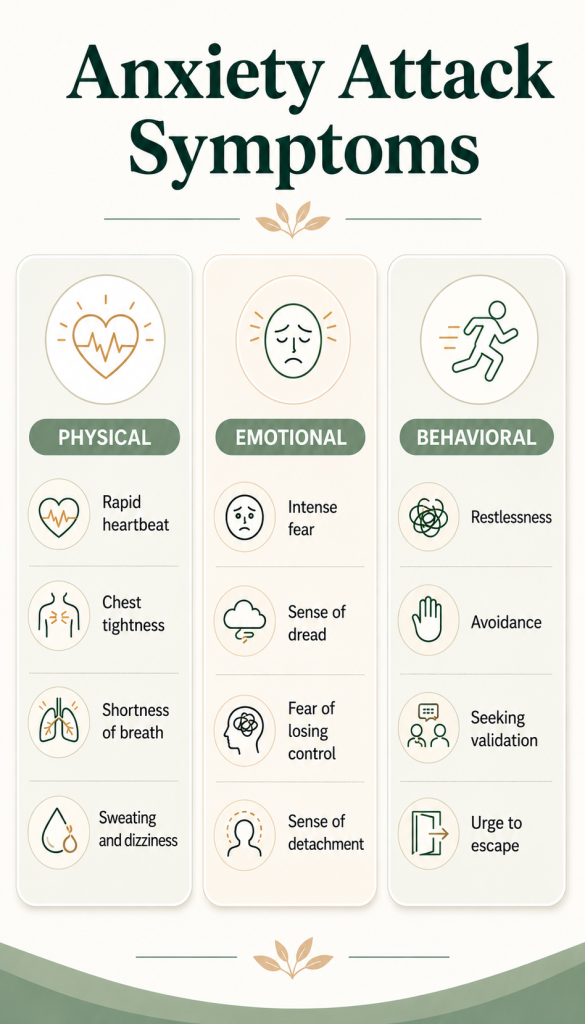
Anxiety attack symptoms show up in different ways. Here is how they often present themselves:
Physical Symptoms:
- Rapid heartbeat
- Chest tightness
- Shortness of breath
- Sweating
- Trembling or shaking
- Dizziness
- Nausea
- Muscle tension or numbness.
Emotional Symptoms:
- Racing thoughts
- Intense fear
- Overwhelming dread
- Fear of losing control
- Feeling detached or unreal
- Difficulty concentrating.
Behavioral Symptoms:
- Restlessness
- Difficulty staying present
- Seeking reassurance from others
- Avoidance
- Urge to escape.
When to Seek Medical Help?
If you experience chest pain, persistent shortness of breath, fainting, severe weakness, or symptoms that feel new or different from past anxiety attack symptoms, seek medical help right away to rule out a medical emergency.
It is always better to reach out immediately. Most of the time, these sensations are part of an anxiety attack, but getting clarity makes a significant difference.
Anxiety Attack vs Panic Attack: What’s the Difference?
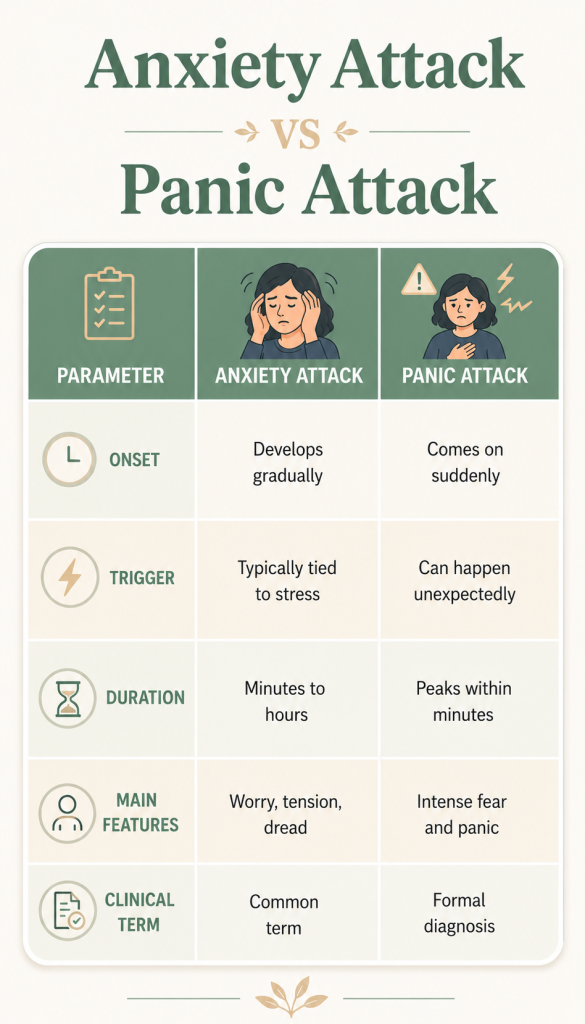
Many people want to understand anxiety attack vs panic attack to know what they are experiencing. Here is a clear comparison:
| Aspect | Anxiety Attack | Panic Attack |
| Onset | Often develops slowly | Often comes on suddenly |
| Trigger | Typically linked with stress and anxiety | May happen unexpectedly |
| Duration | Can last anywhere between a few minutes and a few hours | Can peak within minutes |
| Experience | Often feels like a sense of worry and dread | Often involves intense fear and panic |
| Clinical Status | An unofficial term, not a formal diagnosis | An official diagnosis |
Both anxiety attack vs panic attacks can feel physical and overwhelming. At the same time, both can benefit from therapy, coping skills, and structure.
If anxiety attacks are starting to affect your daily life, it may be an indication to reach out to licensed mental health specialists to understand what triggers your anxiety and develop tools to feel more in control.
Anxiety Attack Symptoms in Males vs Females
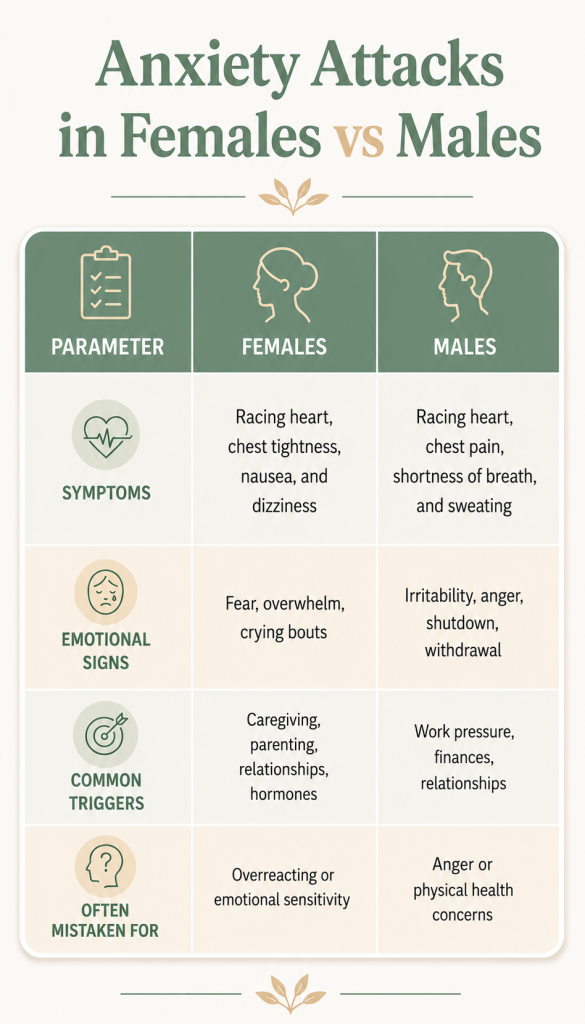
Anxiety attack symptoms in males and anxiety attack symptoms in females can look different because of stress patterns, social expectations, hormonal shifts, and coping habits. Anxiety attacks can affect anyone, but symptoms may be expressed differently.
| Aspect | Anxiety Attacks in Females | Anxiety Attacks in Males |
| Common Physical Symptoms | Racing heart, chest tightness, dizziness, nausea, trembling, or feeling faint | Racing heart, chest pain, shortness of breath, dizziness, sweating, or muscle tension |
| Emotional Expression | May be linked with fear, overwhelm, crying, irritability, or feeling emotionally flooded | May be linked with irritability, anger, restlessness, shutdown, or feeling physically tense |
| Common Triggers | May be connected to high demands of work, family life, and interpersonal conflicts | May be connected to work and finances, interpersonal conflicts, and the pressure not to show emotions |
| How Others May Interpret | May be mistaken for sensitivity and overreaction | May be mistaken for frustration and anger |
| Helpful Support | Support often involves therapy and setting boundaries. | Support involves therapy and practical coping tools. |
The symptoms may look different from the outside, but the body is still responding to stress, fear, or overload.
What Causes Anxiety Attacks?
Anxiety attacks have certain contributors, such as:
- Chronic stress
- Work pressure
- Relationship conflict
- Health concerns
- Major life changes
- Caffeine or stimulant use.
Anxiety attacks often happen when you have been carrying more stress than you can process, both emotionally and physically.
How to Calm an Anxiety Attack in the Moment?
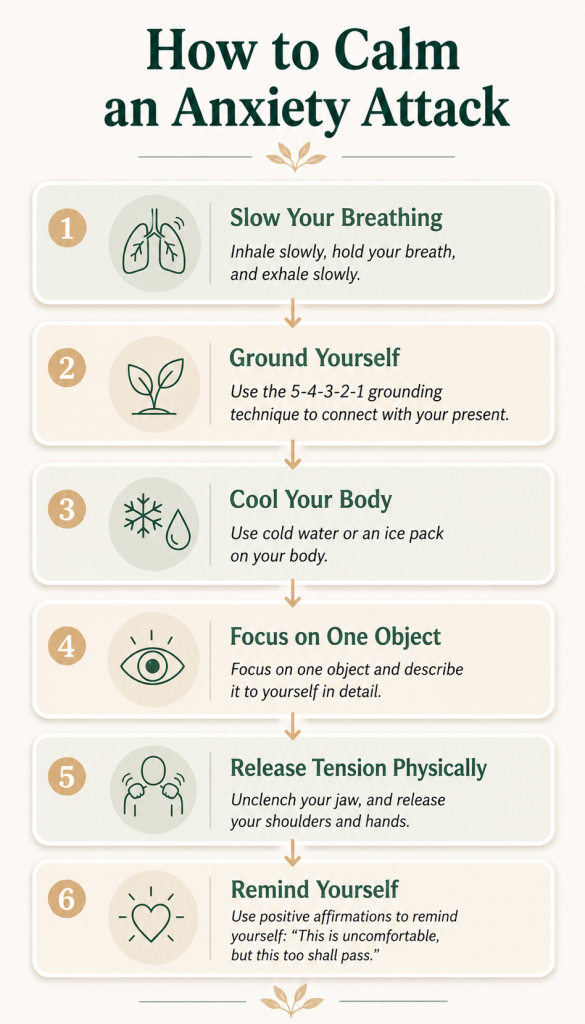
When an anxiety attack begins, these steps can help your body settle:
- Inhale slowly, hold your breath, and exhale slowly.
- Use the 5-4-3-2-1 grounding method. Notice the 5 things you see, 4 things you feel, 3 things you hear, 2 things you smell, and 1 thing you taste.
- Use something cold on your body – like an ice pack to bring attention back to the present moment.
- Release muscle tension. Loosen your jaw, lower your shoulders, and soothe your hands.
- Remind yourself it will pass. Use positive affirmations such as, “This does not feel good now, but it will not stay.”
Anxiety attacks rise and settle down. The goal is not to fight it, but to allow your body to settle down.
Note: At the same time, it is also important that you seek immediate medical care to rule out other serious medical emergencies.
What to Do After an Anxiety Attack?
As the intensity eases, you can
- Drink water
- Rest a while
- Notice what may have triggered it
- Write down patterns
- Consider whether they are becoming more frequent
- Reach out to someone you trust immediately.
What Helps If Anxiety Attacks Keep Happening?
If anxiety attacks keep returning, longer-term strategies make a real difference: therapy such as cognitive behavioral therapy (CBT) for anxiety can identify triggers, reduce avoidance, and develop coping skills.
CBT gives you a structured way to understand and respond to anxiety differently.
While many begin with therapy, more structured outpatient support, such as intensive outpatient programs and partial hospitalization programs, provides more consistency than weekly therapy alone, as they also offer a combination of therapies, clinical oversight, coping tools, community, and aftercare.
When Anxiety Starts Affecting Daily Life?
Anxiety attacks may start impacting your life when you notice:
- Difficulty focusing
- Trouble sleeping
- Feeling afraid of another attack
- Avoiding places, tasks, or conversations
- Feeling unable to manage responsibilities.
Most who experience anxiety attacks are not in a crisis or on the verge of a breakdown yet – but it does not mean you need to overlook them either.
When More Structured Support May Help?
While therapy is often the starting point for many, more structured programs like IOP and PHP can provide consistent care – even without having to put your life on hold. IOP may be helpful when anxiety is affecting your daily functioning, but you still need flexibility for school, work, or family responsibilities. PHP may be helpful when symptoms feel more disruptive, and you need more support – it is for more severe concerns.
The next step is to get clarity – speak with licensed mental health specialists in a safe, confidential setting to understand your experiences and learn what level of care makes most sense to you.