

High-Functioning Anxiety: When You Look Fine But Feel Overwhelmed

High-Functioning Anxiety: When You Look Fine But Feel Overwhelmed

Table of Contents

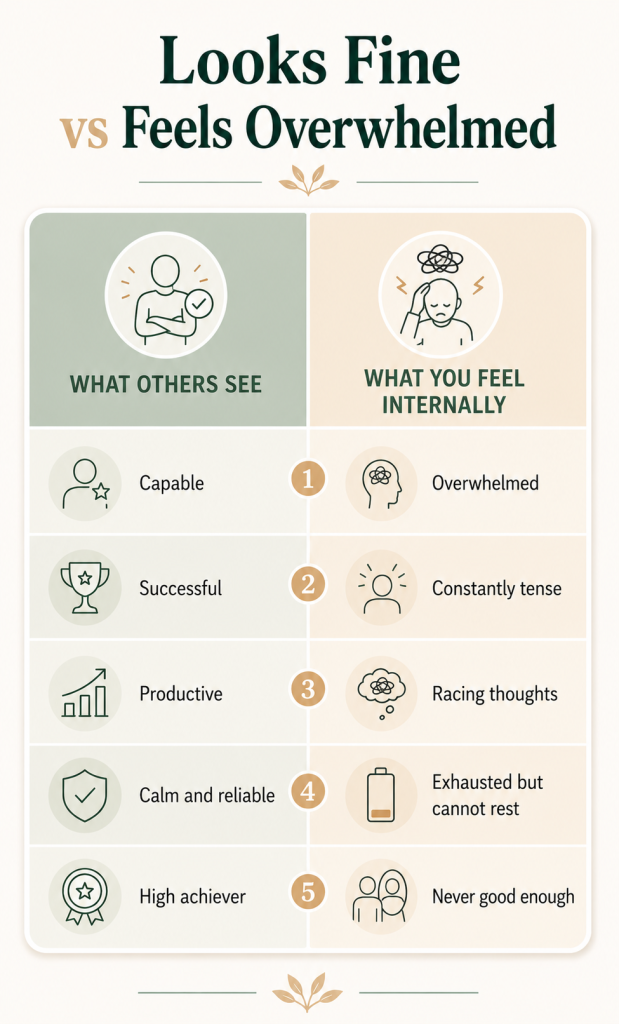
On the surface, everything looks fine. You are waking up, showing up for responsibilities, getting things done – others see you as strong and reliable, but internally – you know something is off. Your mind can never fully turn off. You feel tense and overwhelmed most of the time, and it feels like you are just pushing through to the next day. If this sounds familiar, you may be experiencing high-functioning anxiety.

High-functioning anxiety describes a pattern where someone appears productive or successful externally while experiencing ongoing internal anxiety, overthinking, tension, and pressure beneath the surface.

What Is High-Functioning Anxiety?

High-functioning anxiety describes a pattern where someone appears relaxed and productive on the outside while experiencing ongoing internal anxiety, such as overthinking, perfectionism, tension, and overwhelm. 

High-functioning anxiety is not always a formal diagnosis, but it describes a real experience where someone continues functioning while anxiety quietly affects their quality of life.

It is commonly used to describe hidden anxiety. It can overlap with generalized anxiety. Functioning through anxiety does not always mean you feel okay internally, even if others cannot see what you are carrying.
High-Functioning Anxiety

What High-Functioning Anxiety Feels Like?

High-functioning anxiety often feels like your mind is always preparing for what could go wrong. You might notice the 7 signs of high-functioning anxiety, such as:

  • Overthinking
  • Perfectionism
  • Procrastination or avoidance
  • Physical symptoms like headaches, jaw clenching, and sleep disturbances
  • Difficulty resting
  • Social withdrawal
  • Co-occurring patterns of substance use

Even in moments that need to be peaceful, your thoughts race ahead to the next thing, a potential concern, or a way you could have done better. 

Signs of High-Functioning Anxiety

Signs of High Functioning Anxiety

High-functioning anxiety symptoms can show up as mental, behavioral, and physical. Here are common signs of high-functioning anxiety:

Mental Signs:

  • Racing thoughts
  • Overthinking
  • Catastrophization
  • Imposter syndrome
  • Fear of making mistakes or disappointing others

Behavioral Signs:

  • Overworking
  • People-pleasing
  • Difficulty saying no
  • Staying busy to keep your thoughts from the anxiety within
  • Needing control

Physical Signs:

  • Headaches
  • Sleep disturbances
  • Muscle tension
  • Jaw clenching
  • Digestive concerns
  • Fatigue

If these patterns feel familiar, reaching out early to seek the care you need and deserve can enable you to understand these patterns and learn practical tools to manage them in a healthier manner.

If Sounds Familiar, You Do Not Have to Figure It Out Alone

If these patterns feel similar to what you are experiencing, exploring therapy or structured care for anxiety can enable you to understand and change these patterns.

The Achievement-Anxiety Cycle

Achievement Anxiety Cycle

One of the most challenging aspects of high-functioning anxiety is how it fuels achievement. The cycle often looks like this:

  • Over-preparing and overworking
  • Productivity leads to achievement
  • Achievement leads to rewards
  • Rewards lead to the strain of keeping up
  • Rest begins to feel unsafe or unproductive

Over time, the cycle leads to exhaustion or burnout. When anxiety becomes the fuel for achievement, it can start to feel less like relief and more like the demand to keep proving yourself. This pattern of overachieving and anxiety is incredibly common among high performers.

Why High-Functioning Anxiety Is Easy to Miss?

High-functioning anxiety is easy to miss because you are functioning – outwardly, even thriving, maybe. You are showing up for responsibilities, you are being productive, and others are praising you. It becomes easy to hide just how much it is costing you from within.

You might find yourself thinking, “I am doing fine, so it may not be anything.” This can make it harder to recognize how much anxiety is affecting you beneath the surface.

High-Functioning Anxiety vs. Burnout

High Functioning Anxiety vs Burnout

High-functioning anxiety is different from burnout, but it can eventually lead to burnout. Here is a brief overview of how they compare:

High-Functioning Anxiety Burnout
Everything looks fine from the outside, but internally, you experience anxiety You feel depleted from prolonged stress
Underlying fear and need for control Often driven by exhaustion and depletion
Productivity is high Motivation and energy often decline
Rest feels uneasy Rest may not feel restorative
Can lead to burnout over time Often follows prolonged stress

High-functioning anxiety can be an indication of burnout – but you do not have to be in a crisis or breakdown to reach out. The earlier you understand the pattern, the easier it can be to change it. 

You Do Not Have To Wait Until You Feel Burned Out

You do not have to wait until anxiety leads to burnout. Reaching out early can prevent the symptoms from worsening even further.

How High-Functioning Anxiety Can Show Up in Men and Women?

High-functioning anxiety can look different depending on personal circumstances, roles, and socialization. Here are some common patterns:

Common Patterns in Women Common Patterns in Men
Over-responsibility and caregiving concerns Work or performance expectations
Fear of letting others down and the difficulty in saying “No.” Irritability, tension, or shutdown
Difficulty to rest Difficulty expressing concerns directly
Managing everyone else’s needs first Channeling anxiety into productivity
Feeling overwhelmed while keeping up with the daily demands and responsibilities Appearing relaxed from the outside, while feeling strained from within

What Drives High-Functioning Anxiety?

High-functioning anxiety is an ongoing pattern, fueled by demands, responsibility, and internal expectations. Common reasons may be:

  • Perfectionism
  • Fear of failing
  • Need for control
  • Prolonged stress
  • High expectations
  • Inability to slow down

Many people with high-functioning anxiety grow up feeling that their value is tied to performance, productivity, or how much they can do for others. Over time, this can make slowing down feel uncomfortable or unsafe.

Treatment for High-Functioning Anxiety

The good news is that effective treatment for high-functioning anxiety exists and can make a real difference. Typical treatment options involve:

  • Acceptance and commitment therapy
  • Mindfulness
  • Setting boundaries
  • Lifestyle changes that prioritize nutrition, sleep, exercise, and other healthy routines
  • Medication when required

Reaching out does not mean you are falling behind or in a crisis – it means your mind and body are telling you that your internal anxiety is impacting your focus, productivity, relationships, and other aspects of life.

Treatment is not about removing ambition or productivity. It is about learning how to function without anxiety constantly driving the system.

When Weekly Therapy May Not Feel Like Enough

Many who seek care for high-functioning anxiety typically begin with weekly therapy. While this is greatly useful, it may not be enough for all. Some signs that weekly therapy may not be enough for your anxiety are:

  • Anxiety feels constant
  • The days between one therapy appointment and another feel stressful
  • You feel unable to slow down
  • Burnout starts to show
  • You feel you need more support between therapy sessions, too.

For some people, anxiety feels manageable during therapy sessions but difficult to sustain alone throughout the rest of the week. Structured outpatient options like intensive outpatient programs offer more structure throughout the week with the flexibility of maintaining your daily responsibilities, while partial hospitalization programs offer more intensive daytime care for severe concerns.

You Can Feel Better Without Losing What You Have Built

Seeking the care you need and deserve does not mean leaving the life you have built for yourself behind. It is about finding care that fits seamlessly into your life.

If you are experiencing patterns of high-functioning anxiety, reaching out to licensed mental health specialists can enable you to understand your experiences and offer clarity on what your next steps can be.

Get Clarity On Your Next Steps

If anxiety is impacting your performance, health, sleep, and relationships, reaching out to someone who understands can offer clarity on what level of care makes sense for you.
faq

Frequently Asked Questions

What is high-functioning anxiety?

High-functioning anxiety is when everything about your life seems to be relaxed and productive from the outside, but you experience a sense of tension, fear, and overwhelm from within.

Common signs of high-functioning anxiety are overthinking, people-pleasing, fear of making mistakes, difficulty resting, and perfectionism.

High-functioning anxiety is not a formal diagnosis; it may overlap with generalized anxiety and burnout.

High-functioning anxiety can eventually lead to burnout if not addressed early.

High-functioning anxiety can be treated with therapy, skills training, lifestyle modifications, and even medications if required.

When high-functioning anxiety is impacting your health, sleep, work, productivity, and relationships, it may be an indication to reach out for the care you need and deserve.

Clinically Reviewed By
Clinical Director, Skyline Recovery Center

Sheldon Cohen is a licensed family and marriage therapist and the Clinical Director at Skyline Recovery Center. He believes in blending clinical expertise with a strong commitment to mentoring the next generation of therapists. From adolescent IOPs to adult behavioral health care, he believes in personal growth – whether it is found in making meaningful connections, building strong clinicians, or even in staying grounded in your personal interests.

Helpful Readings