

Disclaimer: This article is for informational purposes only and is not meant to replace expert medical or mental health advice. If you are experiencing high-functioning PTSD symptoms, reach out to licensed and trained clinicians for diagnosis and treatment. For urgent/emergency needs, call 9-1-1 or your local emergency number immediately.
The World Health Organization (WHO) informs us that nearly 70% experience a traumatic event in their life. Some, around 3.9%, go on to develop post-traumatic stress disorder (PTSD). PTSD typically impedes your daily life and functioning, but sometimes – those who are struggling with this disorder seem totally fine.
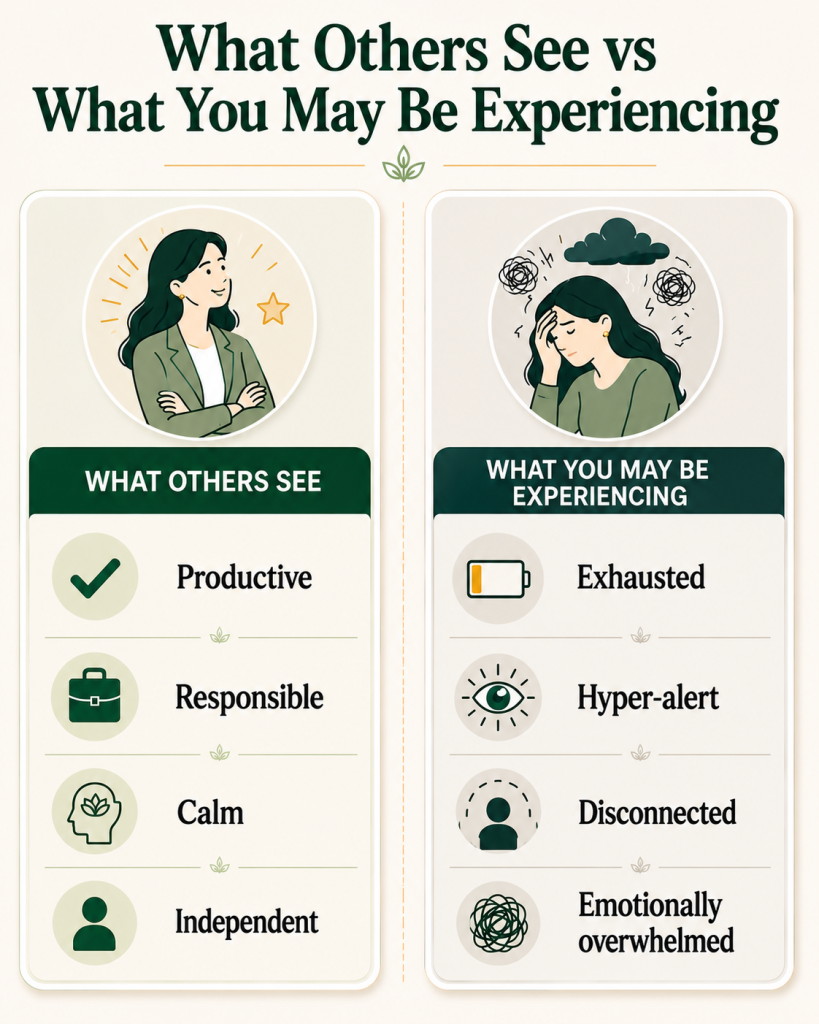
Well, they do – on the surface. But internally, they can experience constant hypervigilance, scanning for trouble, difficulty relaxing, and feeling disconnected from their life and the world around them.
This is known as high-functioning PTSD (HF-PTSD). While not a formal diagnosis, it refers to a type of PTSD where you function outwardly, but struggle on the inside. PTSD does not always look like you are falling apart – sometimes, the struggle is feeling constantly overwhelmed from inside, where every day becomes a struggle, and you can feel like you are just functioning while overwhelmed.
What Does High-Functioning PTSD Look Like?
High-functioning PTSD is not a formal diagnosis, but it can impact lives physically and mentally.
The person is able to manage their studies, jobs, parenting, and other responsibilities. But this does not mean the deep-rooted symptoms go away.
Signs like anxiety, overthinking, hypervigilance, constantly feeling on edge, and disconnectedness develop slowly. They may not be visible or recognizable – even to those close to them. This is why functioning with PTSD can be challenging to identify and treat.
What Are the Signs of High-Functioning PTSD That Can Go Unnoticed?
Signs of high-functioning PTSD that often go unnoticed are the typical signs of the disorder – except that the person is functioning on the inside, while experiencing these symptoms from within.
Physical Signs
- Muscle tension
- Headaches
- Sleep disruption
- Constant tiredness.
Cognitive Signs
- Racing thoughts
- Overthinking
- Hypervigilance
- Difficulty focusing.
These symptoms are often linked to hypervigilance and anxiety, which can keep the mind in a constant state of “being on the edge”.
Emotional Signs
- Anxiety
- Overwhelm
- Difficulty relaxing
- Disconnectedness and numbness.
Some may experience emotional numbness PTSD symptoms, making it difficult to connect with emotions, relationships, or everyday experiences.
Behavioral Signs
- Avoiding the environments or persons linked with the traumatic experience
- Staying busy
- Overworking
- Social withdrawal.
High-functioning PTSD is concerning as it keeps the person totally okay from the outside – but internally, you would never know that all this is going on.
But if you notice these symptoms in yourself or someone you know, you can consider exploring whether deep-seated traumatic memories/experiences are having an impact on your inner world.
How Does High-Functioning PTSD Become Harder to Manage?
Despite being high-functioning, PTSD-related stress may begin to become difficult to manage. It may not show up as PTSD typically does, but can show up as signs like:
- Anxiety
- Overwhelm
- Emotional exhaustion
- Sleep disruption
- Relationship troubles
- Co-occurring substance use as a way to cope
- Burnout.
These are some of the common trauma symptoms in adults, particularly when unresolved experiences keep impacting daily life.
If you notice these signs, you can benefit from trauma-focused care that explores the traumatic experiences underlying these symptoms. It treats the whole you – not just your symptoms.
How Can High-Functioning PTSD Be Treated?
Many can struggle with high-functioning PTSD, but trauma-focused care is effective when it is tailored to meet you where you are so that your healing journey can feel relevant to you.
Typically, high-functioning PTSD is treated with psychotherapeutic modalities, such as:
- Cognitive Behavioral Therapy (CBT): CBT identifies underlying thinking patterns to challenge and change behavior. You can explore your traumatic experiences in safe and confidential settings and learn to cope with them in a healthy way.
- Eye Movement Desensitization and Reprocessing (EMDR) Therapy: EMDR uses bilateral movement of the eyes to process traumatic memories.
- Exposure Therapy: As avoidance is typically common in HF-PTSD, exposure therapy exposes you to your fears in a safe and controlled manner so that you can learn to cope with them in productive ways.
Those with HF-PTSD may begin with weekly outpatient therapy. But sometimes, weekly therapy may not feel enough. So, you can also consider exploring more structured options that combine therapy, skills training, medication (if required), and other services in outpatient settings.
Partial hospitalization programs and intensive outpatient programs for HF-PTSD provide consistent care and structure for trauma-related concerns – even without requiring you to put your life on hold.
Trauma Does Not Have to Define Your Future
Trauma is common – and it can lead to PTSD. Even if high-functioning PTSD is not always what it looks like from the outside, the challenges within can become overwhelming.
However, these challenges do not have to define your now or your future. Whenever you are ready, you can reach out to licensed and trained mental health practitioners who will sit with you in safe and confidential settings to understand your experiences and needs to offer more clarity on the next step in your or your loved one’s healing journey.