

Many LGBTQ+ adults go through their days carrying a quiet weight. You might feel emotionally exhausted after managing studies/work demands, relationships, family responsibilities, and the everyday stresses of life, all while keeping things together on the surface. You wonder if mental health support for LGBTQ+ adults can help, yet something holds you back from taking that step. You want to reach out, but uncertainty lingers.
For many, the hardest part of getting care is not recognizing they are struggling – it is feeling confident whether they will feel understood, respected, or emotionally safe. Concerns about judgment, previous negative experiences, and the challenge of finding affirming care can make reaching out feel more complicated, even when support could be helpful.
This experience is more common than you might realize. You are not alone in feeling this way, and it does not mean you are weak. It often reflects a deep desire for care that feels safe, respectful, and genuinely supportive.
Why Finding Support Can Feel More Complicated Than It Sounds?
Hesitation around mental health support for LGBTQ+ adults is a common response for many in the LGBTQ+ community. It frequently stems from past experiences where you did not feel fully seen or heard. You may feel anxious about judgment, or about having to explain aspects of your life repeatedly just to feel comfortable.
This kind of vulnerability can feel risky when you are unsure whether the person sitting in front of you will truly understand your perspective. Uncertainty about finding the right therapist and clinical team just adds to this even more. Psychological safety matters deeply – knowing that your experiences will be met with empathy rather than judgment.
This is the reason why many LGBTQ+ adults hesitate to reach out – not because they reject help, but because they are seeking care that honors who they are and what they carry.
Hesitation often comes from wanting to feel safe and understood, not from a lack of willingness to get help.
Why Some LGBTQ+ Adults Feel Hesitant About Mental Health Support?
Many LGBTQ+ adults experience stress, anxiety, depression, emotional exhaustion, burnout, or overwhelm while managing studies, work, relationships, family responsibilities, and daily life. While mental health support for LGBTQ+ adults can be beneficial, some hesitate to reach out as they are unsure whether they will feel seen, understood, or comfortable throughout the process.
Finding the right fit often plays a major role in whether someone benefits from mental health care or not.
The care you need and deserve will feel more approachable when licensed and experienced mental health specialists explain your options, and you are comfortable in exploring them at your own pace.
Common Concerns That Keep People From Exploring Support
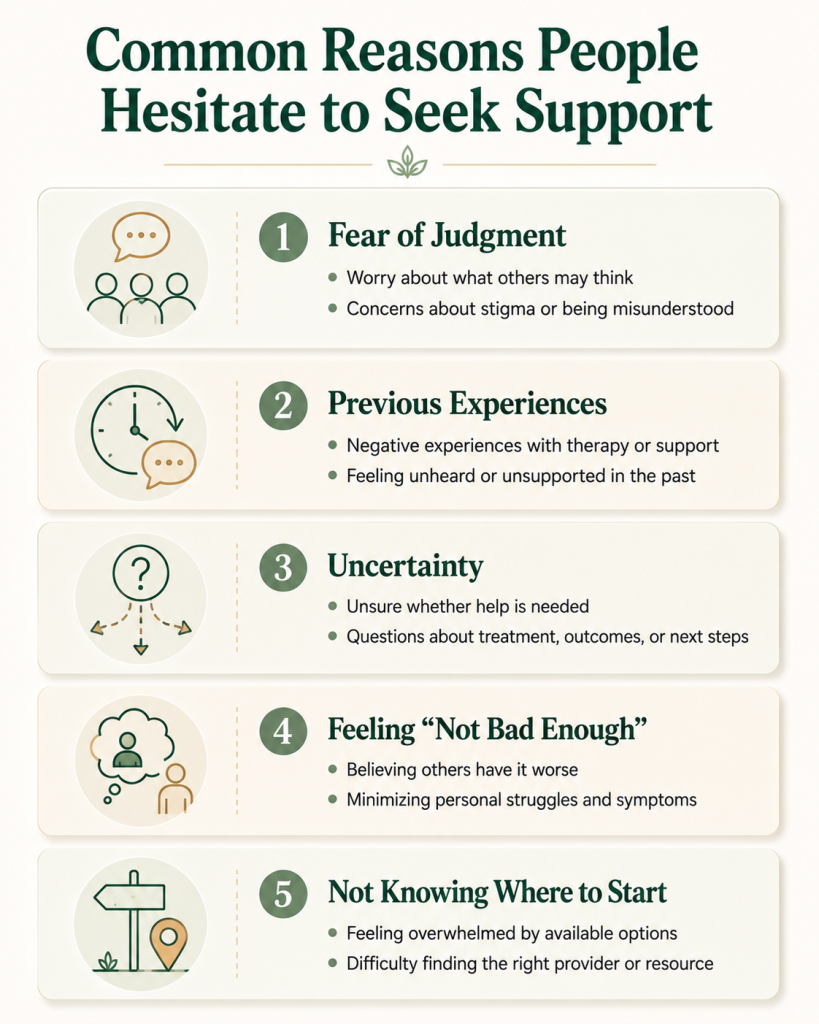
It is common to encounter barriers that make exploring mental health care feel challenging. These concerns are valid and shared by many.
Some thought patterns that might keep you from exploring care options are:
- “I must be able to handle this myself.”
- “Others have it worse.”
- “I am not in a crisis.”
- “I am probably overreacting.”
Some emotional concerns are:
- Uncertainty as to what lies on the other side
- Fear of judgment
- Fear of being misunderstood
- Emotional vulnerability in general.
Some of the practical concerns are:
- Time and cost
- Finding the right provider
- Responsibilities.
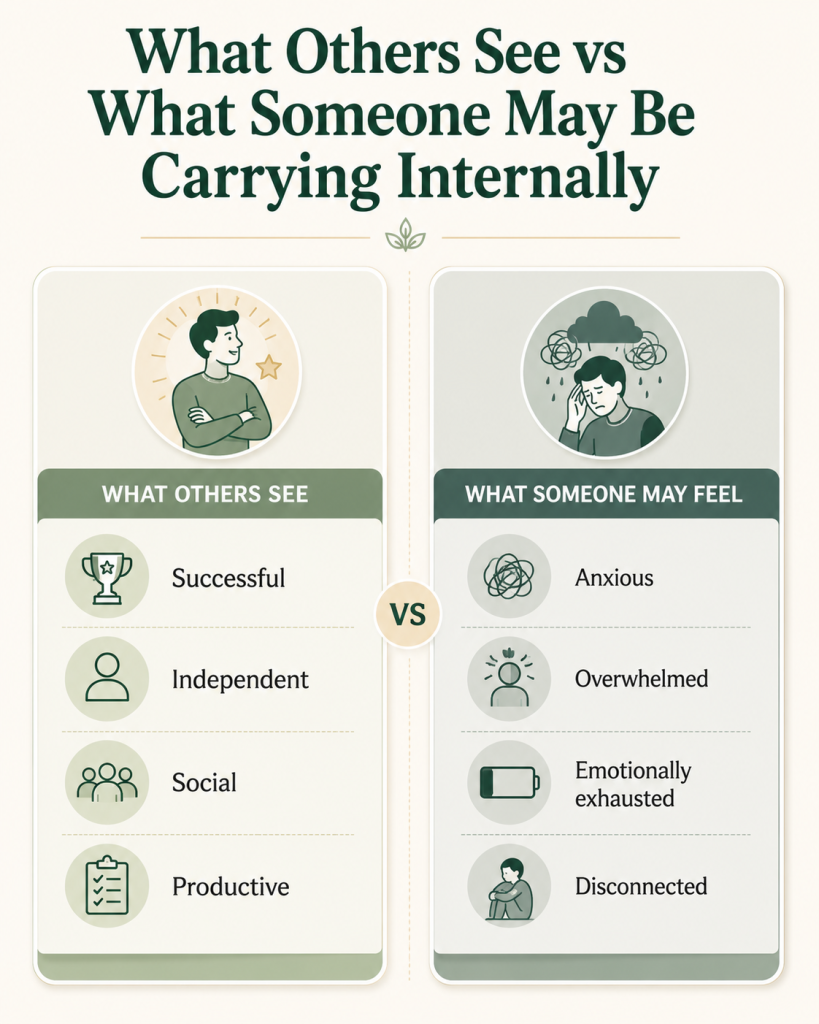
When a person is carrying emotional load internally – whether it is anxiety in LGBTQ+ adults, emotional exhaustion in LGBTQ+ adults, or emotional burnout in LGBTQ+ adults – these are not necessarily visible wounds.
Others, even your closest loved ones, may see you functioning independently, being productive, and leading a fulfilling social life.
But on the inside, you know that what it looks like on the outside is not the truth. You can feel anxious, overwhelmed, and disconnected from your own life and relationships.
This is one of the reasons why many spend more time questioning whether they deserve care than questioning whether they are struggling.
When Anxiety, Emotional Exhaustion, and Burnout Start Affecting Daily Life
Anxiety, emotional exhaustion, and burnout can quietly build over time. You might notice increased irritability, persistent fatigue even after rest, difficulty focusing on tasks, emotional shutdown, sleep disruption, or a sense of overwhelm that makes everyday responsibilities feel heavier.
These experiences do not mean you are failing. You can continue functioning while quietly carrying more emotional burden than you realize. Acknowledging these signs can be an important step toward feeling lighter.
You Do Not Have to Wait Until Things Get Worse
Mental health support for LGBTQ+ adults is not reserved only for moments of a mental health crisis or breakdown.
If you spot the signs of internal emotional distress early and reach out early, early care can strengthen emotional wellness, develop coping tools, build resilience, and uplift your overall quality of life. Prevention and early intervention often make a meaningful difference before challenges intensify.
Mental Health Care Can Look Different for Different People
Mental or behavioral health care does not come in a one-size-fits-all box. Every person is unique – and so is their healing journey, too.
As a person from the LGBTQ+ community, your experiences are different from those of others. This is why mental health care exists on a continuum and can take different forms depending on your personal needs.
This may involve therapy, LGBTQ+ support groups, or structured outpatient care. What matters most is finding an approach that aligns with where you are and what feels manageable.
For some LGBTQ+ adults, there may come a point when weekly therapy stops being enough support. If anxiety, emotional exhaustion, or daily stress continue affecting your quality of life, exploring your options can help you better understand what additional support may look like.
What Structured Outpatient Mental Health Support Can Look Like?
Structured outpatient mental health care provides additional support while allowing individuals to continue living at home and maintaining many of their everyday responsibilities.
Depending on the program, support may include:
- Individual therapy
- Group therapy
- Skill-building and coping strategies
- Mental health education
- Psychiatric support when appropriate
- Ongoing treatment planning and accountability
For LGBTQ+ adults who are looking for more support than traditional therapy alone, structured outpatient care can offer a consistent and affirming environment focused on emotional wellness, coping skills, and personal growth.
The goal is not to remove someone from their life. The goal is to provide support that helps them feel more stable while continuing to move forward.
You Do Not Need Certainty Before Exploring Support
You may notice signs such as persistent anxiety that lasts longer than expected, ongoing emotional exhaustion, difficulty coping with daily stressors, or feeling overwhelmed more frequently. These experiences can signal that reaching out to licensed and experienced mental health practitioners can be helpful.
You do not need to be certain of everything before exploring the care you need and deserve – you only need curiosity about whether things can feel better.
Support Should Feel Like a Partnership
Effective mental health care is focused on feeling seen, feeling understood, and on active collaboration. The ideal fit for you involves collaborating with mental healthcare providers who respect your experiences and help you move forward at a pace that feels right.
You are an equal partner in your healing journey – so you are always the focus.
For LGBTQ+ adults in Los Angeles, affirming mental health support may include therapy, support groups, and structured outpatient programs designed to provide additional guidance while maintaining connection to everyday life. The most important step is finding support that feels safe, respectful, and aligned with your needs.